Alongside this year’s seminar series, INTALInC is running a fundraising campaign to support Mukuru Integrated Waste Management, a community-based organisation working with young people in the Mukuru slums, Nairobi.
As part of a study visit to Kenya earlier this year, INTALInC Director Karen Lucas visited the informal settlement, Mukuru kwa Njenga. While there, Karen and Professor Winnie Mitullah (University of Nairobi) met with the Mukuru Integrated Waste Management (MIWM) team and were impressed by their work with the local community.
Mukuru has been a focus of our INTALInC case study research since 2018. It has been under a lot of pressures from external forces in recent years, not least from the impacts of clearance of informal housing and businesses to accommodate the new toll highway. Many local residents and business owners have been forcibly moved out of the area but community organisations like MIWM are still working hard to make things better for the people who remain. As Mukuru has given so much to us over the years, Winnie and I thought it would be nice to give something back and help support these local initiatives.
Karen Lucas, INTALInC
What does Mukuru Integrated Waste Management do?
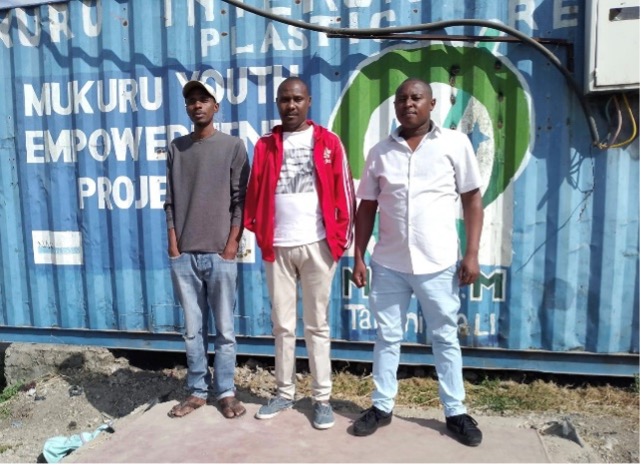
MIWM is a community-based organisation engaging young people to support effective waste management in Mukuru kwa Njenga.
Formed in 2016, MIWM works with the local community, bringing together youth groups and other Mukuru residents to provide waste management services, including:
- Rubbish collection
- Sorting waste
- Transporting rubbish to municipal dumps and recycling facilities
- Routine clean-ups of neighbourhoods in Mukuru Kwa Njenga.
Why is this important?
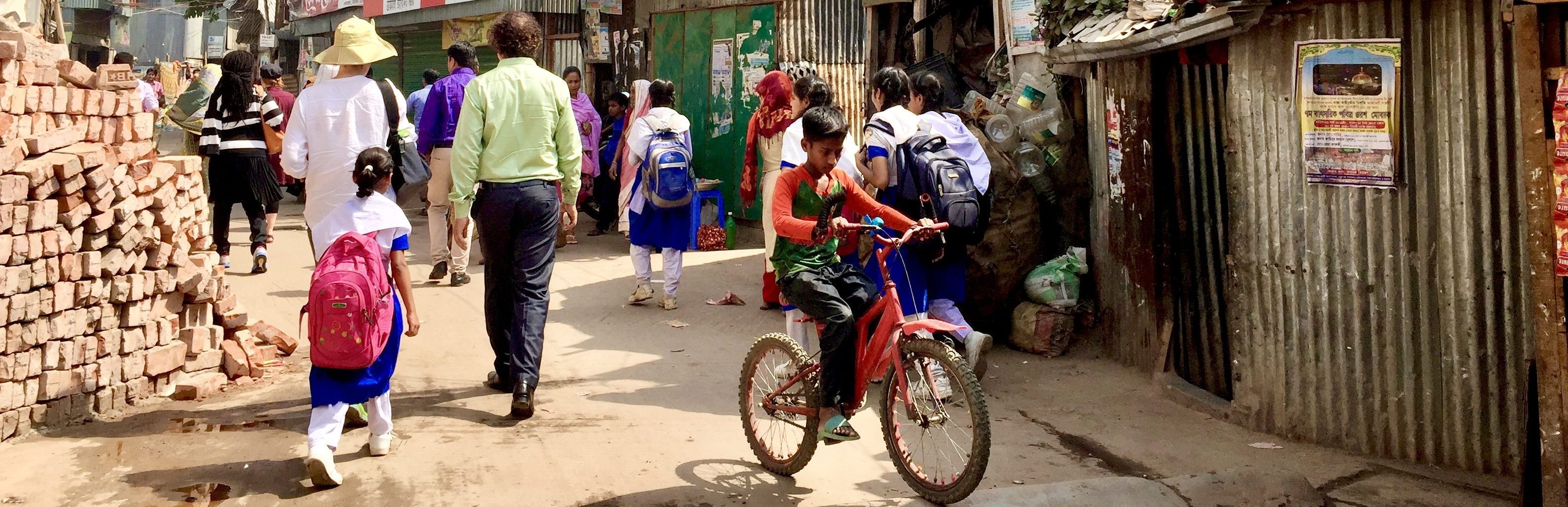
Mukuru Kwa Njenga is home to around 450,000 people. The average resident lives on $1.90 – $3.50 per day, in overcrowded conditions lacking basic infrastructure and utilities.
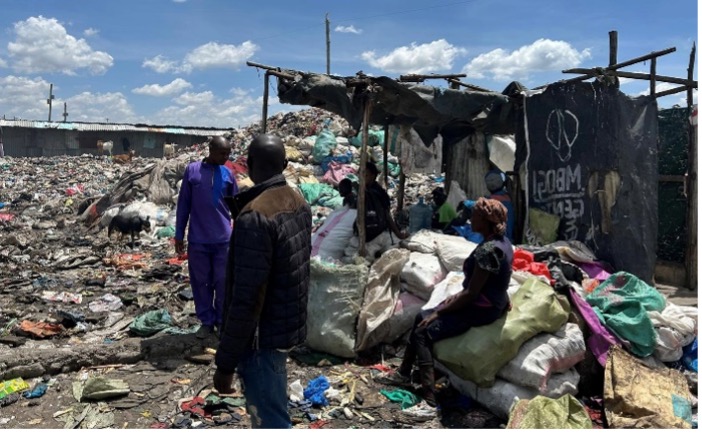
The accumulation of solid waste in the neighbourhood causes numerous problems for the people who live there. Rubbish exacerbates flooding during the rainy season, making moving around the area difficult, if not impossible, and potentially hazardous. People living in Mukuru are affected by respiratory illnesses because of the effect of waste on air quality. This forces residents to spend their limited resources on medical treatment, trapping them in a cycle of poverty (Opiyo, et al., 2020).
As well as affecting physical health, studies have shown that people living close to sites where waste accumulates are vulnerable to poor mental health and wellbeing (Peprah, et al., 2024). INTALInC believes that everyone has the right to live in clean, safe and pleasant environments.
How can you help?
Enhancing the lives and wellbeing of slum dwellers is close to our hearts, and at the core of everything INTALInC does. If you support our mission to bring real change on the ground for young people in Mukuru, and can afford to do so, please consider donating to our fundraiser.
We are very grateful for anything you feel able to give, large or small.
 INTALInC