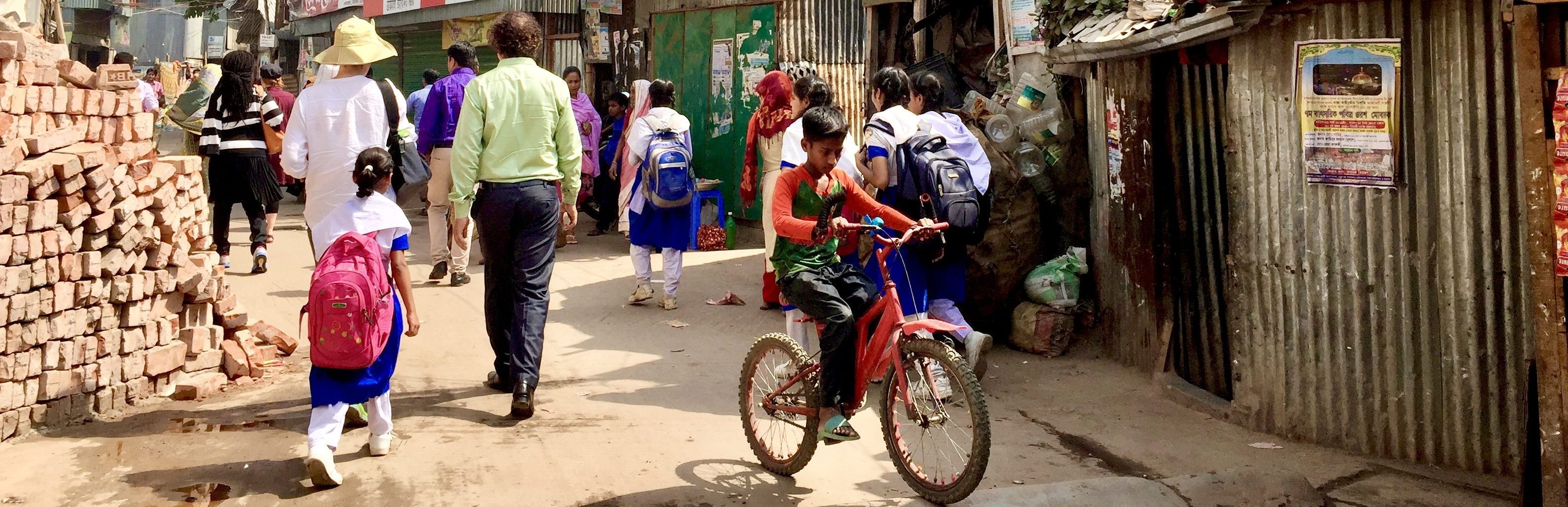
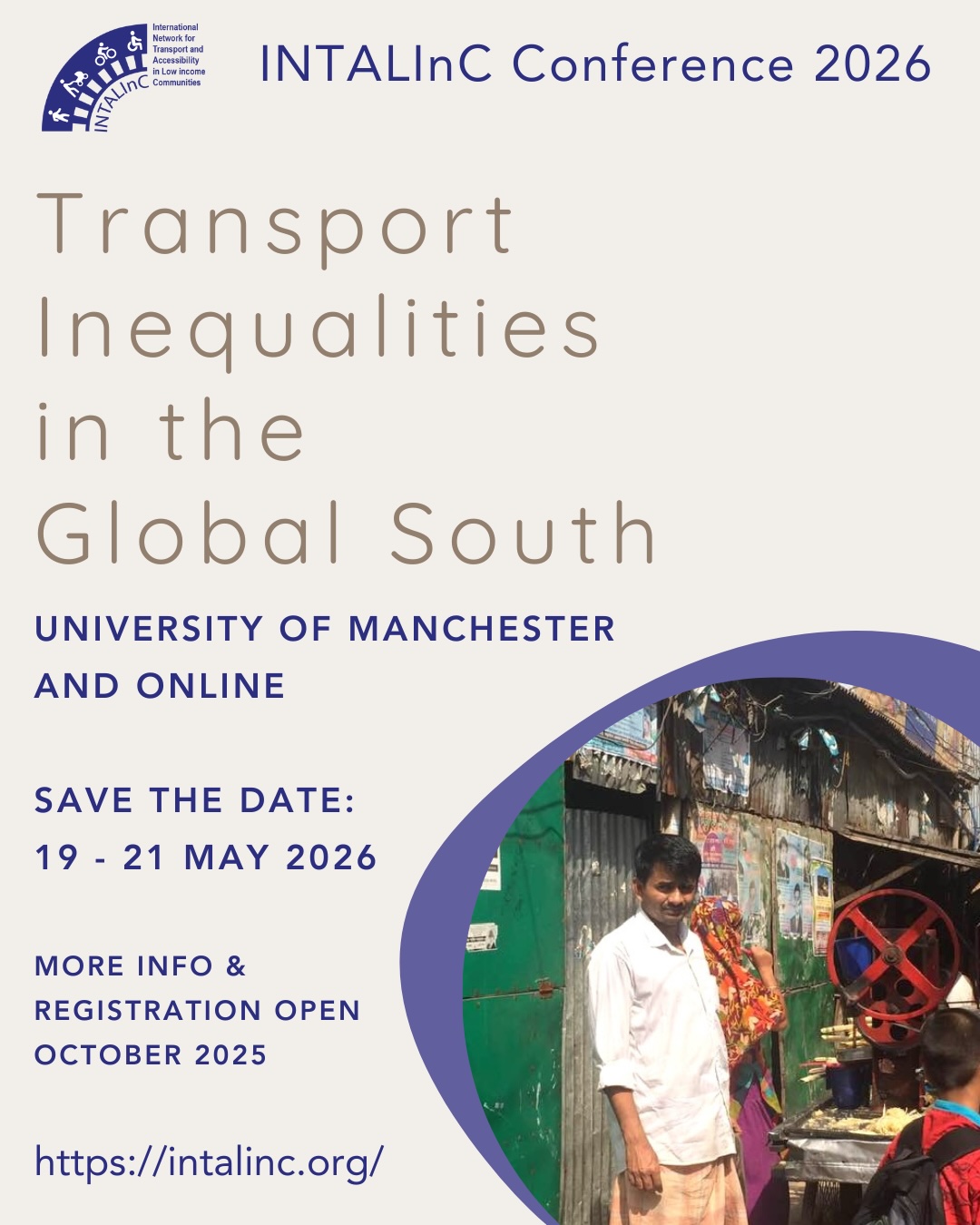
We are pleased to announce that INTALInC will host an in-person conference from 19th – 21st May 2026 at the University of Manchester, supported by the Hallsworth Conference Fund and VREF. More information will become available and registration will open in October 2025. In the meantime, please save the date and contact us with anyContinue reading “INTALInC conference 2026, Transport Inequalities in the Global South”
Category Archives: Uncategorized
INTALInC Seminar Series: Companion fundraiser
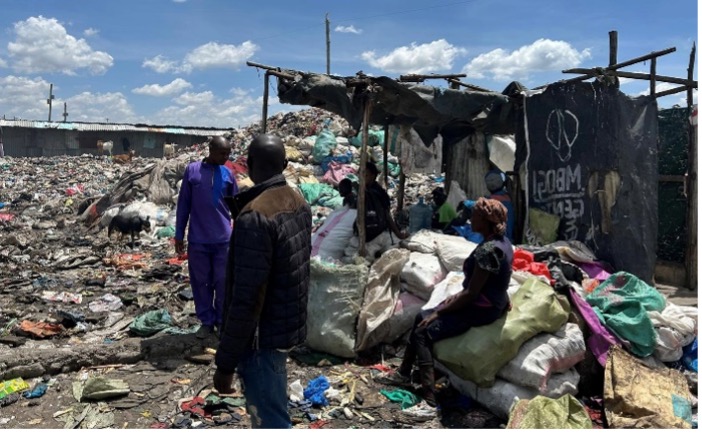
Alongside this year’s seminar series, INTALInC is running a fundraising campaign to support Mukuru Integrated Waste Management, a community-based organisation working with young people in the Mukuru slums, Nairobi. As part of a study visit to Kenya earlier this year, INTALInC Director Karen Lucas visited the informal settlement, Mukuru kwa Njenga. While there, Karen andContinue reading “INTALInC Seminar Series: Companion fundraiser”
Decolonising Transport Planning: What are the implications for transport poverty?
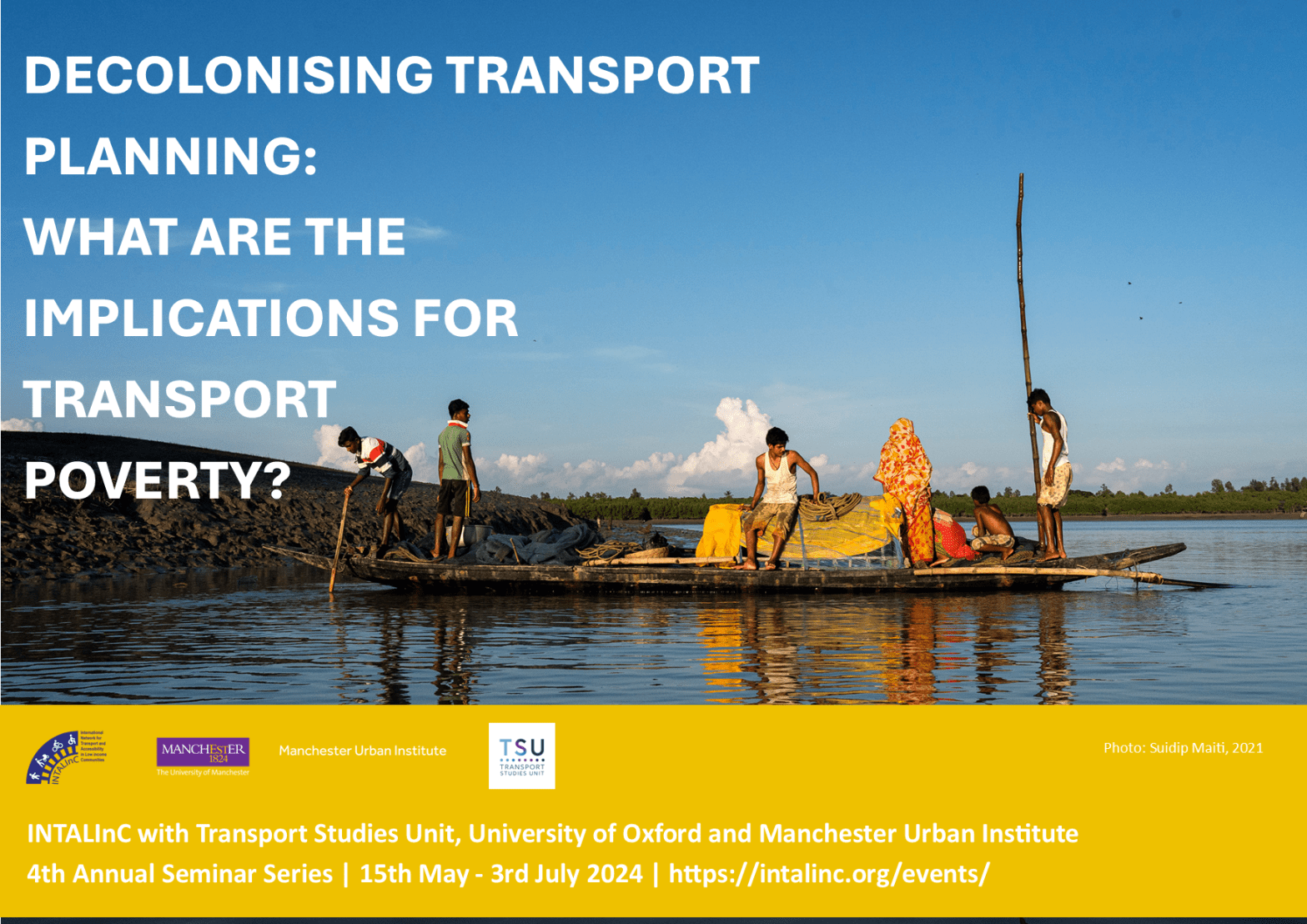
Registration is now open for the INTALInC 4th Annual Seminar Series held in collaboration with Transport Studies Unit, University of Oxford and Manchester Urban Institute. Join INTALInC for an exciting seminar series exploring the implications of decolonisation for transport planning in the global south. The series will be held on Zoom on alternate Wednesdays fromContinue reading “Decolonising Transport Planning: What are the implications for transport poverty?”
INTALInC methods masterclass for early career researchers and postgraduate students
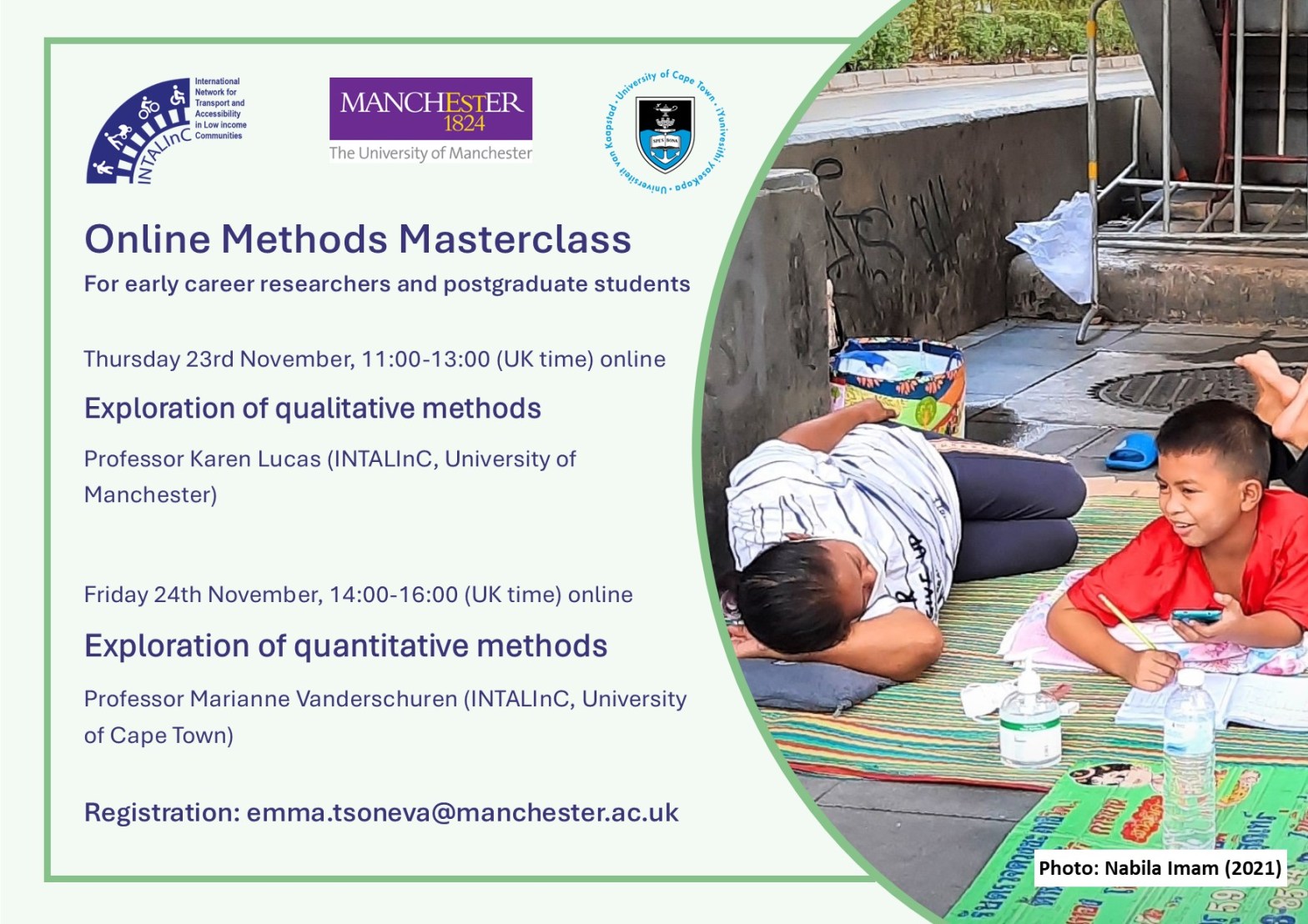
INTALInC and partners at the University of Manchester and the University of Cape Town will present two mixed methods masterclasses for early career researchers and postgraduate students working in the fields of transport and mobilities. The masterclass will be delivered in two online interactive 2-hour sessions: Exploration of Qualitative Methods at 11:00 am (UK time)Continue reading “INTALInC methods masterclass for early career researchers and postgraduate students”
Solutions-led perspectives on inclusive and sustainable mobilities: New pathways, fresh horizons

Second Annual Interactive Bi-weekly Webinar Series starts on 30th September 2021 at 2:00pm (UK time) on Zoom (then every second Thursday until 9th December 2021). Problematizing transport-related social exclusion in global south cities has gained significant research and policy traction in recent years. On the ground solutions to meet the needs and address the concernsContinue reading “Solutions-led perspectives on inclusive and sustainable mobilities: New pathways, fresh horizons”
Framing mobilities in low income communities: A digital photography competition curated by INTALInC
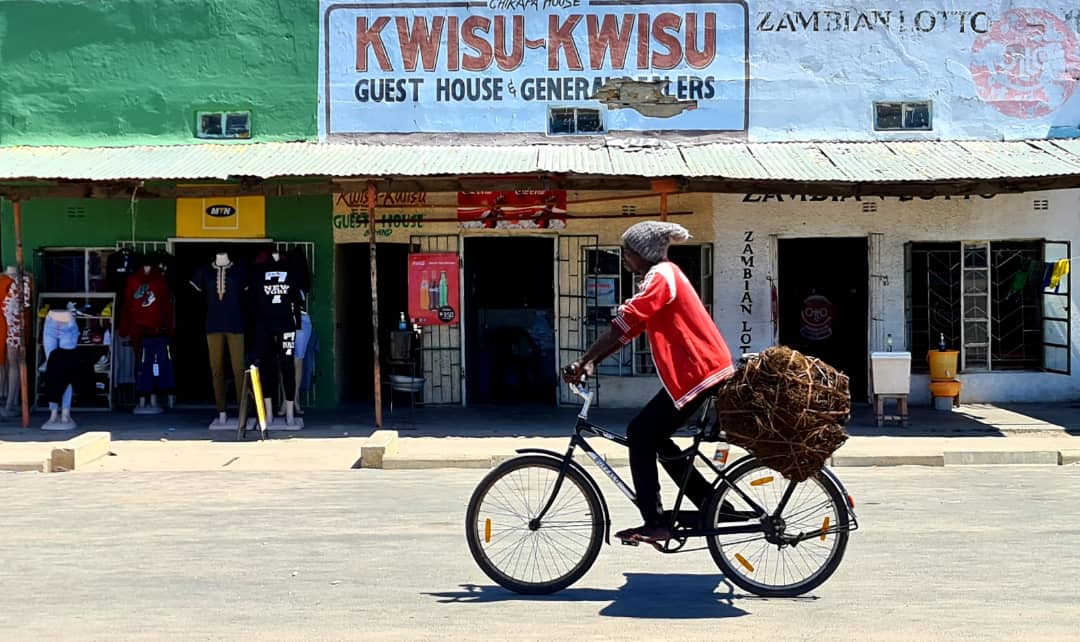
INTALInC in collaboration with the Volvo Research and Education Foundations and Lagos State University, invites photographic and 20 word caption entries from early- and mid-career network members. 1st PRIZE: 250 USD; 2nd PRIZE: 150 USD; 3rd PRIZE: 100 USD We are excited to use the medium of photography to bring visual representations of your workContinue reading “Framing mobilities in low income communities: A digital photography competition curated by INTALInC”
New report recommends ways to improve the mobilities of resource poor women after lockdown
“Moving towards gender equitable public transport operations in a post Covid-19 world” makes a series of compelling policy recommendations aiming to improve the mobilities of resource poor women in the aftermath of the pandemic. The report, produced by Sonal Shah and the Urban Catalysts, and funded under the UK Aid High Volume Transport Applied ResearchContinue reading “New report recommends ways to improve the mobilities of resource poor women after lockdown”
Welcome to INTALInC

INTALInC is working to build lasting research partnerships promoting urban transport systems that can meet the travel needs of low income populations in the Global South
Covid-19 brings more losses than gains for women in South Africa by limiting mobility
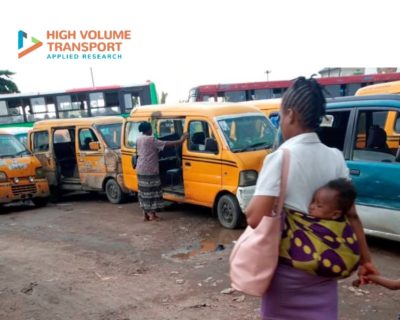
New research looking at the intersections of transport, poverty, resilience and gender concludes that Covid-19 has exacerbated gender inequalities in Sub-Saharan Africa.
 INTALInC